22 09 2026
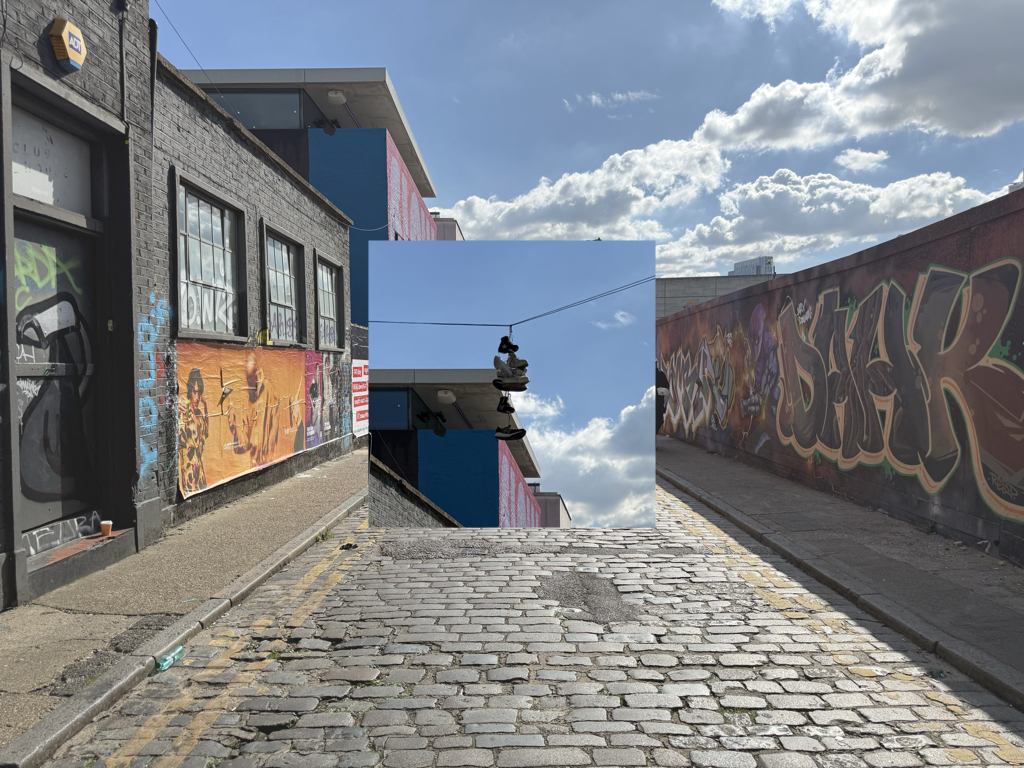
I chose this small section of Chance Street. The hanging shoes first caught my attention, and I became curious about the space around them. I began by testing three ways of observing the same place.
Method 1: Four direction photographic scan
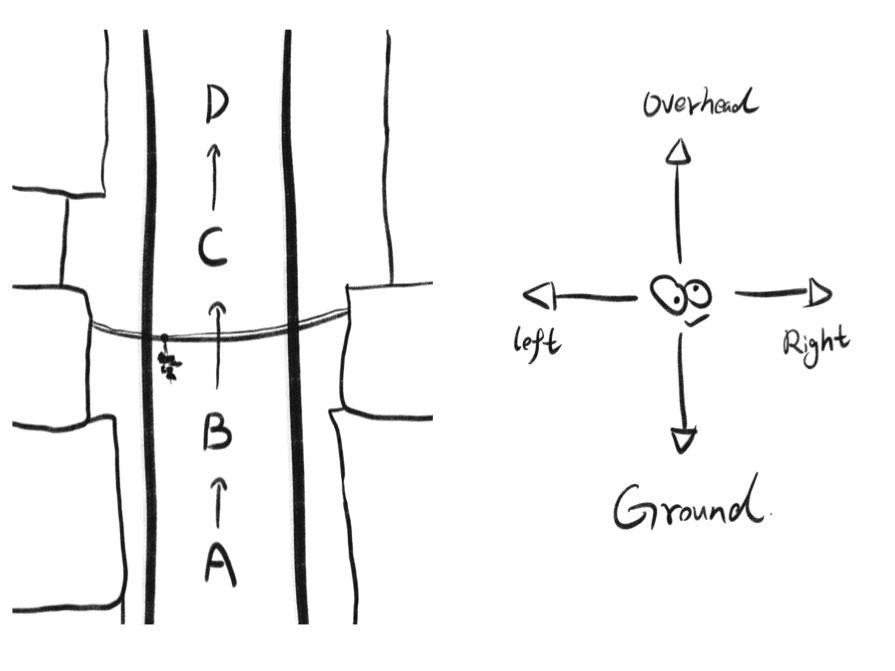
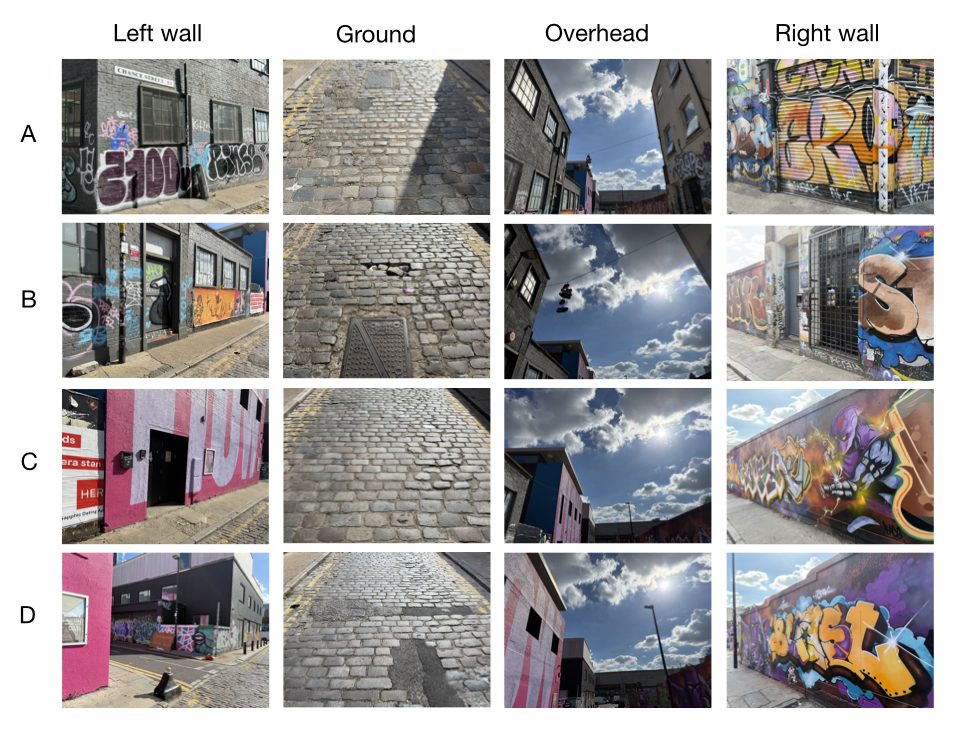
I took photographs in four directions from four positions, marked A to D. At each one, I photographed the left wall, the ground, above me, and the right wall.
I arranged the photographs, with one row for each position. This allowed me to compare what I could see in each direction from different positions. This encouraged me to pay more attention to notice details beyond the hanging shoes and how easily the hanging shoes could disappear from my view when I looked straight ahead.
Method 2: Listening to the street
I recorded sounds at the site and listened to them again at home. This revealed sounds I had missed and made me question where they came from.
I created a video using a black and white street photograph. When a sound occurs, colour returns to the area I associate with it. If I cannot locate a possible source, the image remains unchanged.
The coloured areas represent my interpretation, not confirmed sound locations.
Method 3: Time overlay
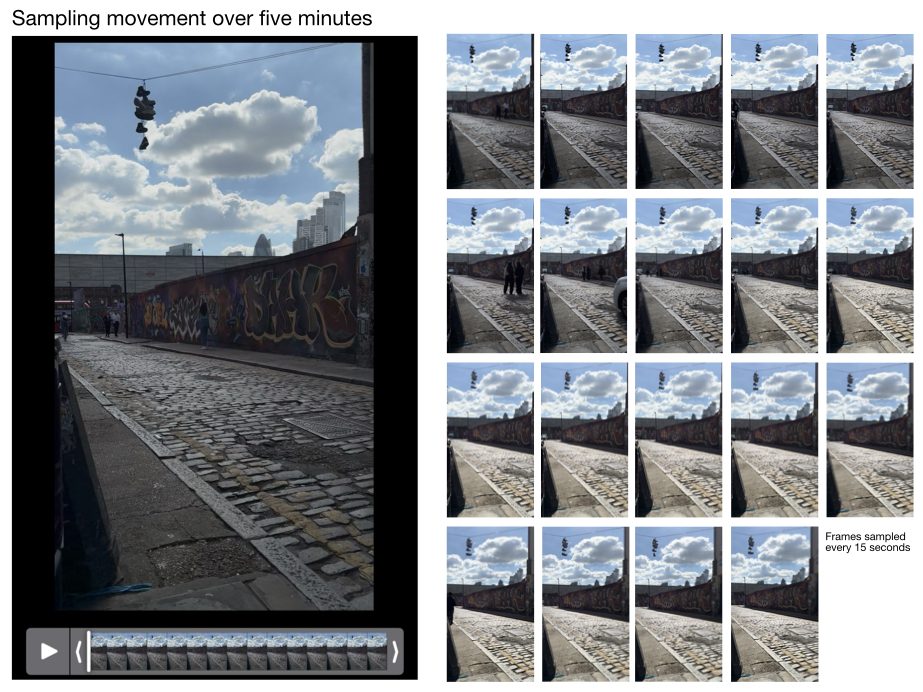
I recorded five minutes from a fixed position, sampling a frame every fifteen seconds. I layered people and vehicles from different moments onto one background, using colour to distinguish time groups.
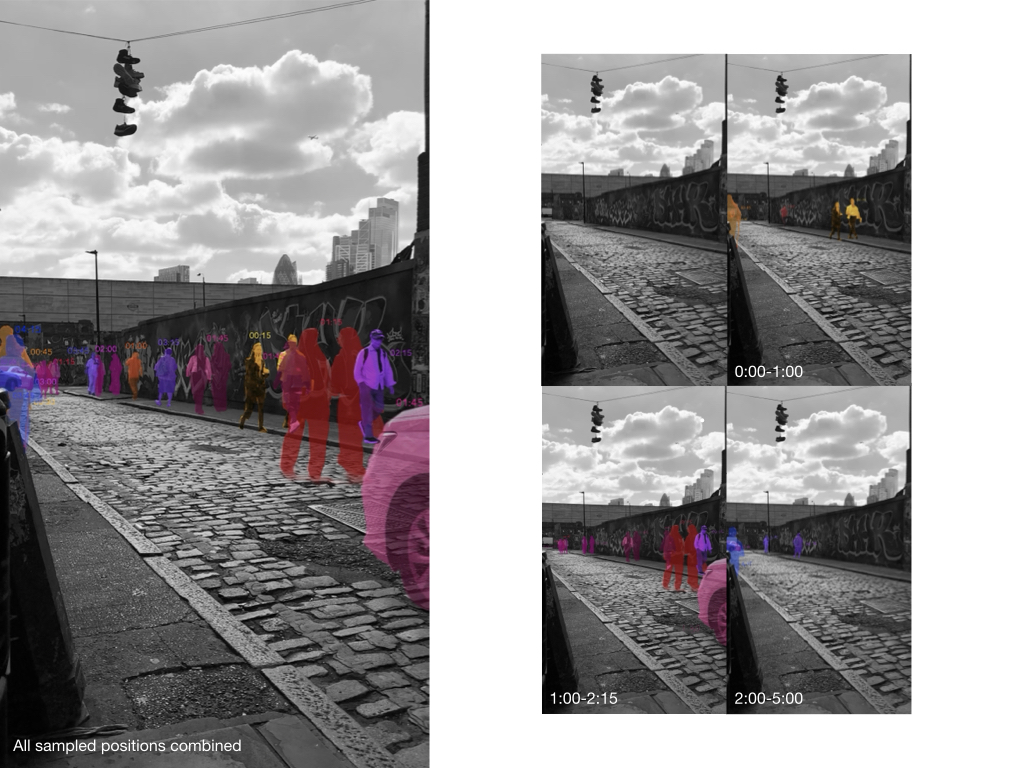
While taking photographs and recording sounds, I had still thought of this street as quiet. Seeing the sampled figures together surprised me: more people had passed through than I had realised. However, combining different moments made the street look busier than at any single moment, and individual actions were difficult to distinguish.
Reflection
This change in my impression made me want to develop the time-overlay experiment further. In the tutorial, I was asked why I had used colour to highlight people and what other techniques I could try. I decided to use the same sampled figures for two paper experiments, exploring how cutting and removing shapes would change the image.
Paper experiments
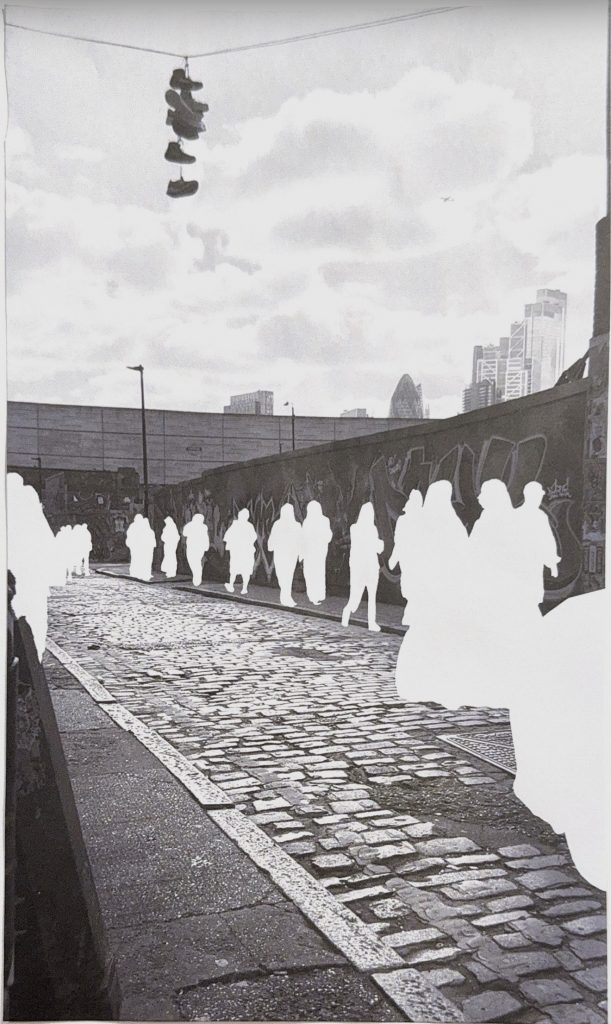
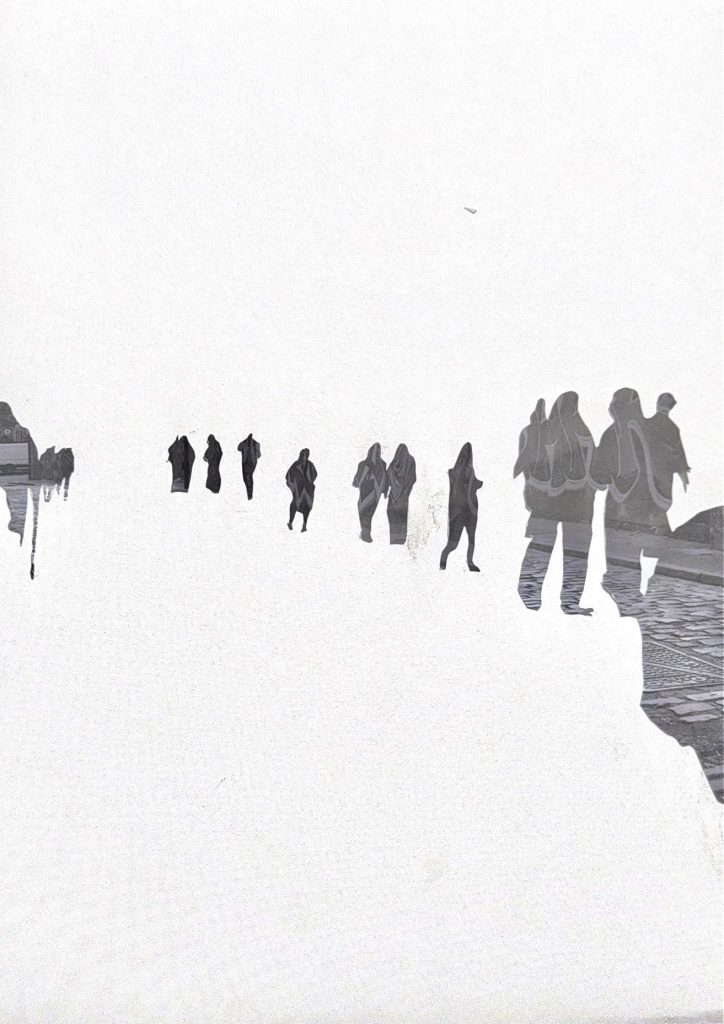
I made two paper experiments using the same sampled figures. In one, I cut the figures out of the street image. In the other, I kept only the street textures inside their shapes.
Without the coloured fills, I paid more attention to the edges of the bodies and where they overlapped. But I still struggled to follow each person’s actions. I wanted to look more closely at the individuals within the combined image, so I returned to the video.
Watching the recording again
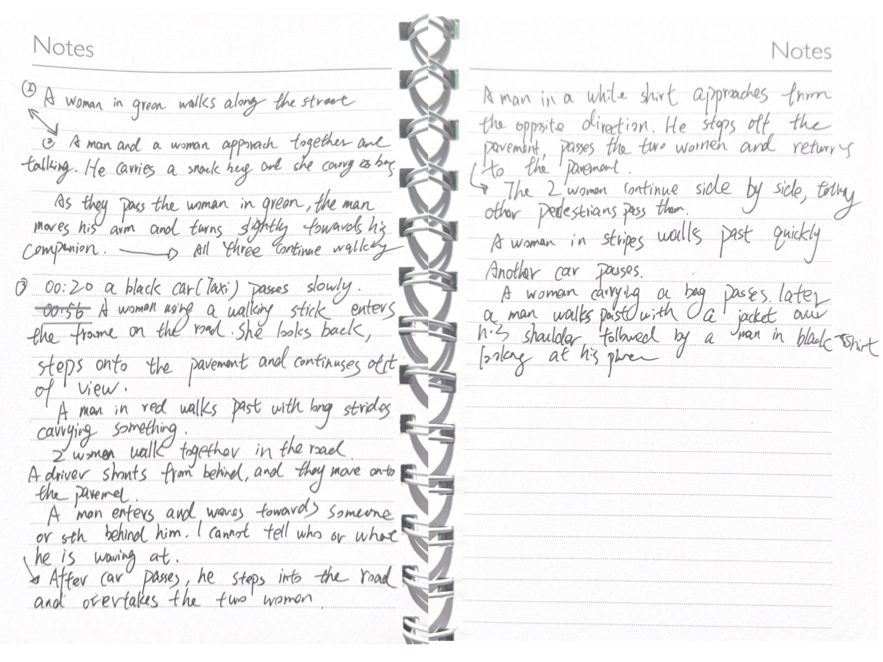
I watched the five minutes again and wrote down what happened. This time, I paid attention to changes in people’s posture and position. I became more interested in what happened when people passed each other than in how many people appeared.
Tracing selected movements
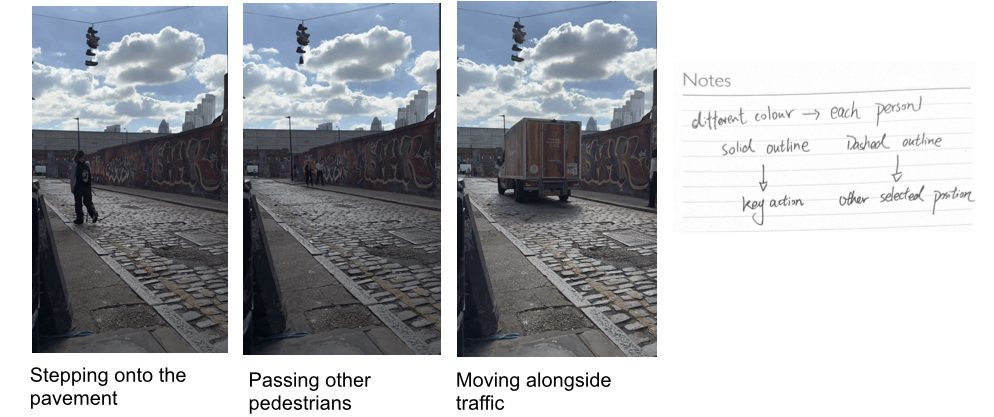
I chose three episodes involving the kerb, other pedestrians and traffic. I paused at noticeable changes and traced the figures, using a different colour for each person.
solid lines mark key actions
dashed lines show other selected positions
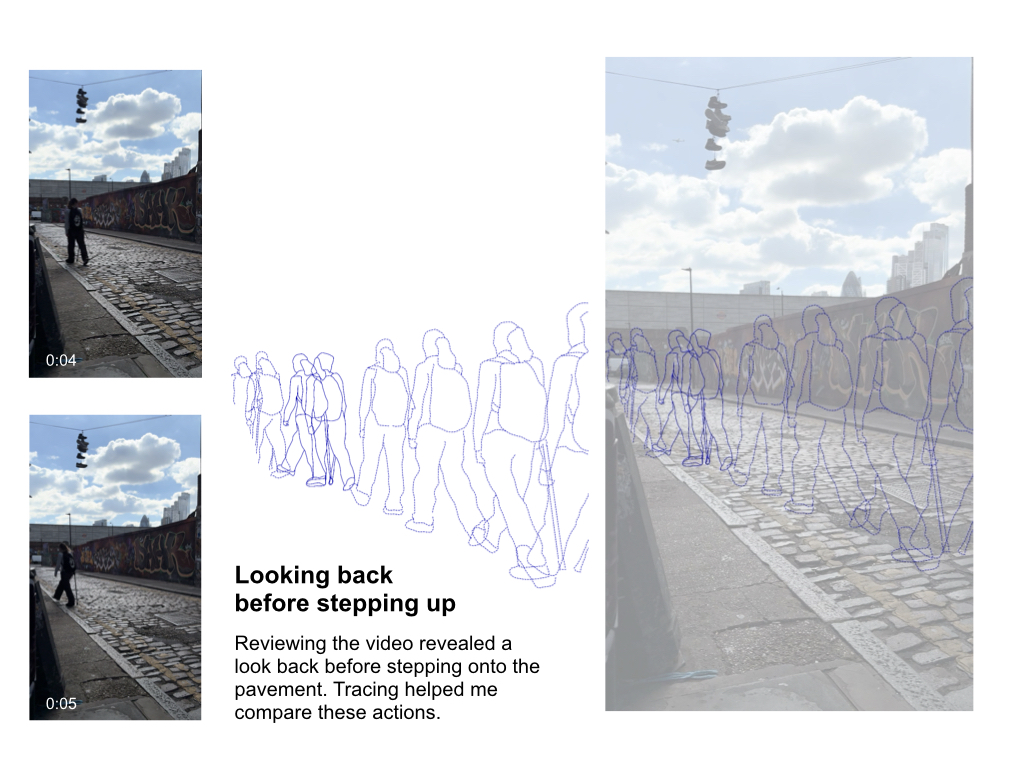
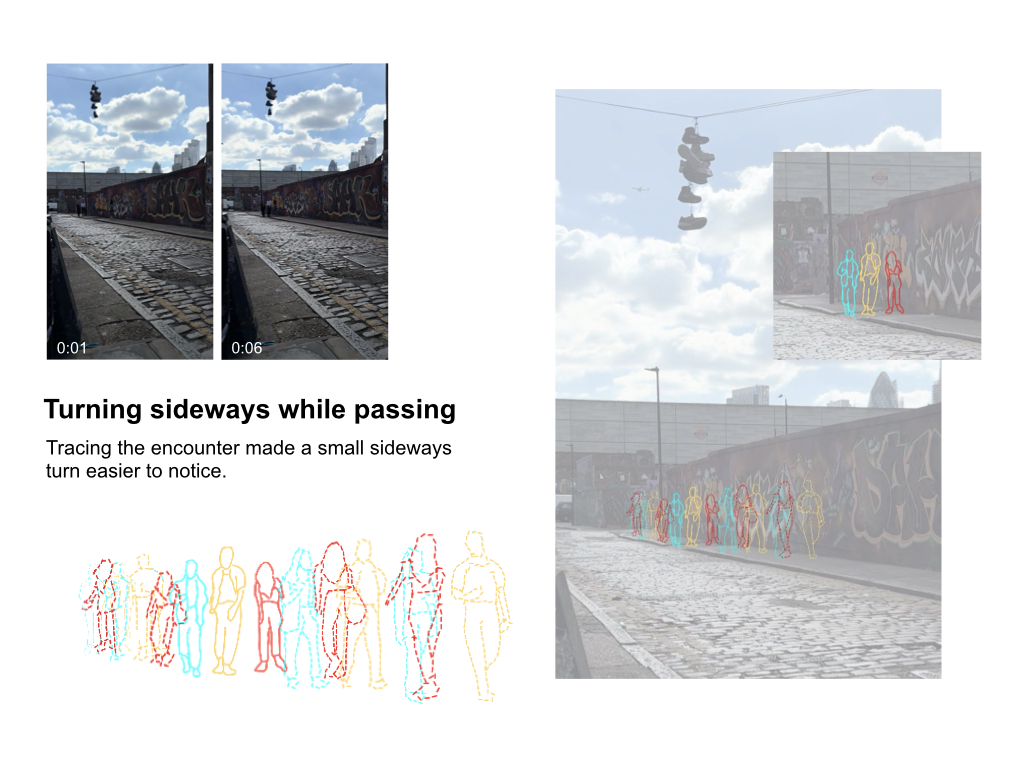
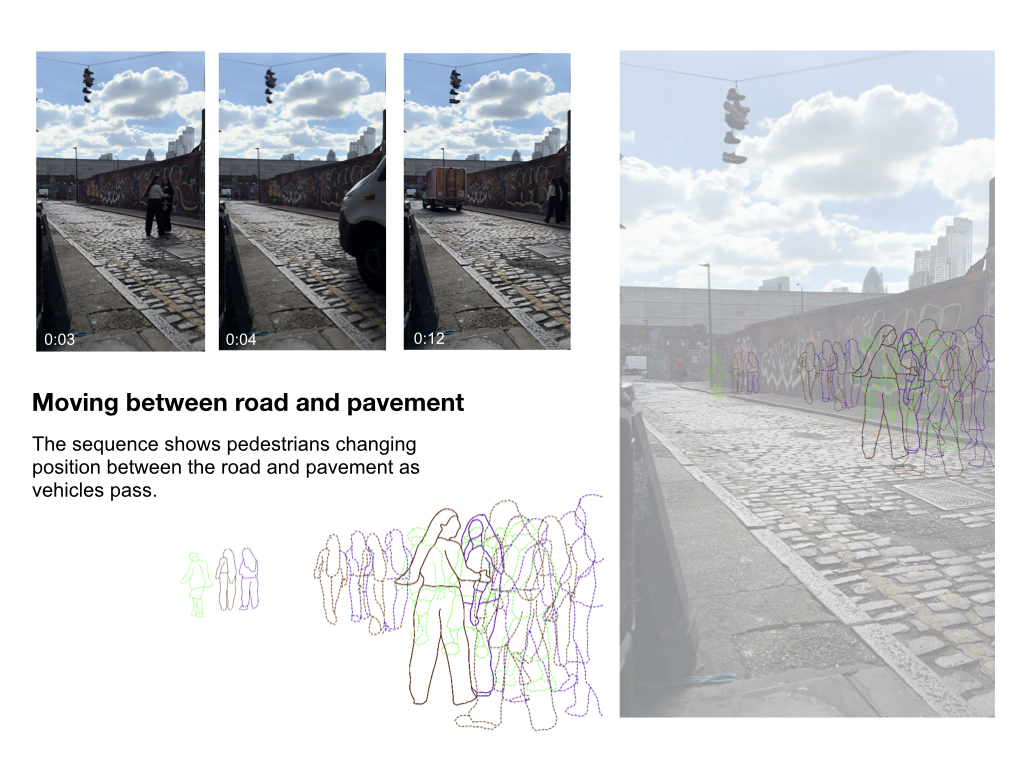
Tracing helped me notice movements I had missed on site: people looking back, turning sideways and moving between the road and pavement.
This made me curious about the street from their positions. As they moved and turned, what parts of Chance Street came into view?
Walking the routes myself
Following the tutorial discussion, I returned to Chance Street and retraced three selected routes. I stopped at key positions and photographed in the directions suggested by their movements. I used their routes to guide my own view of the place.
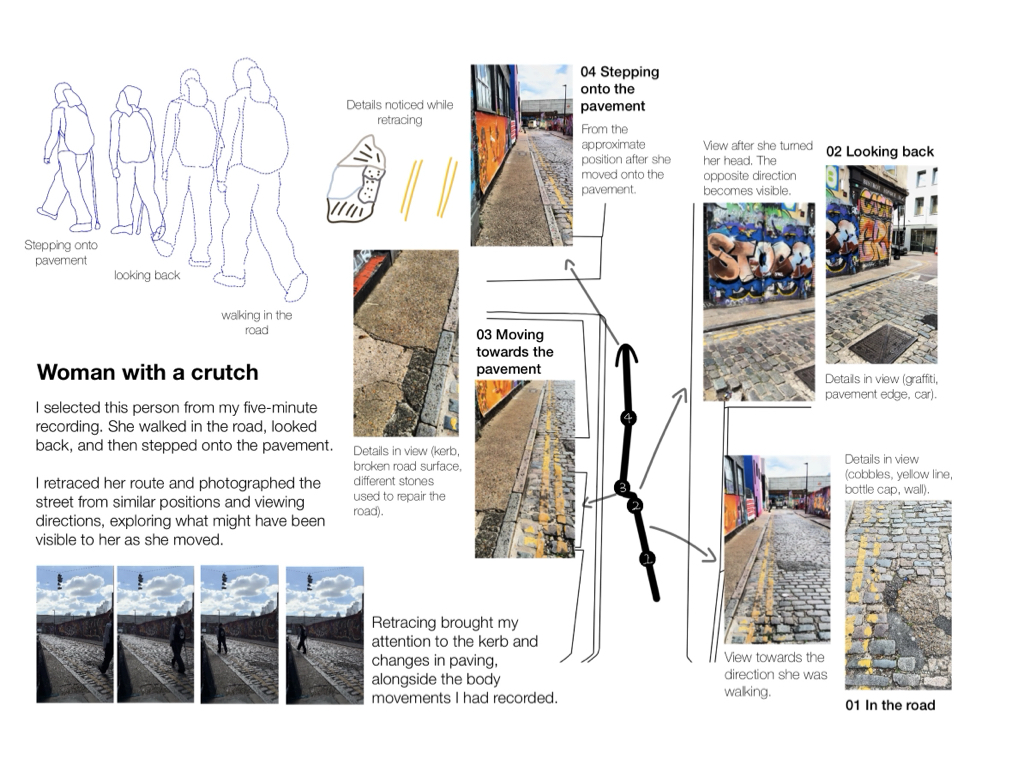
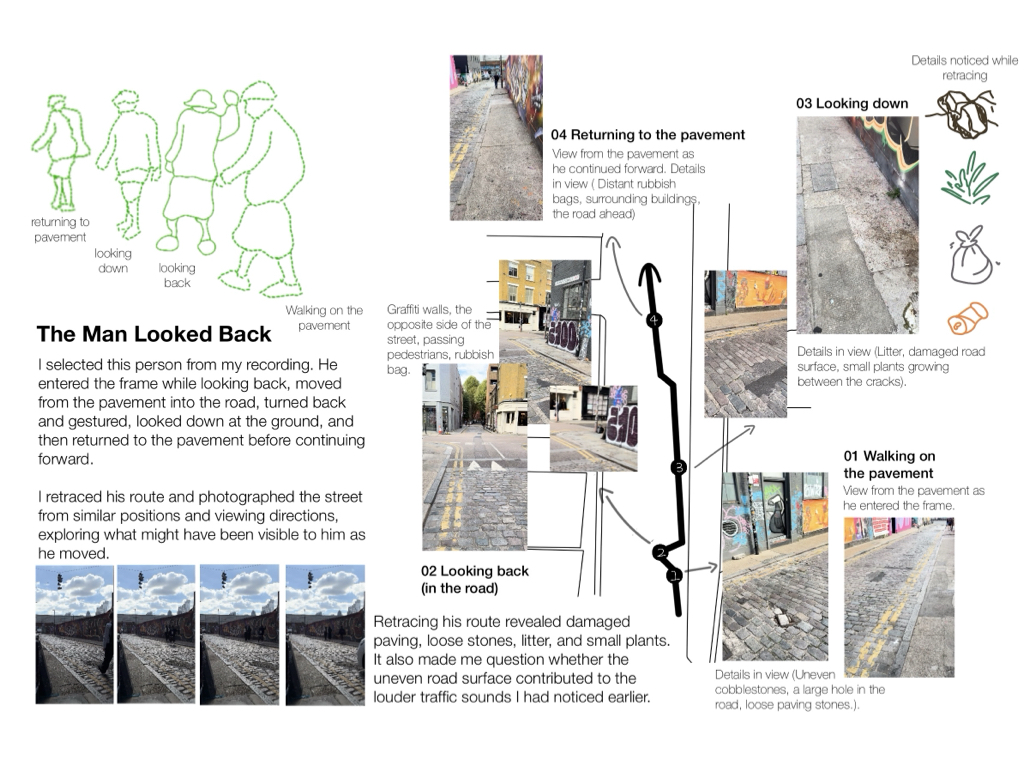
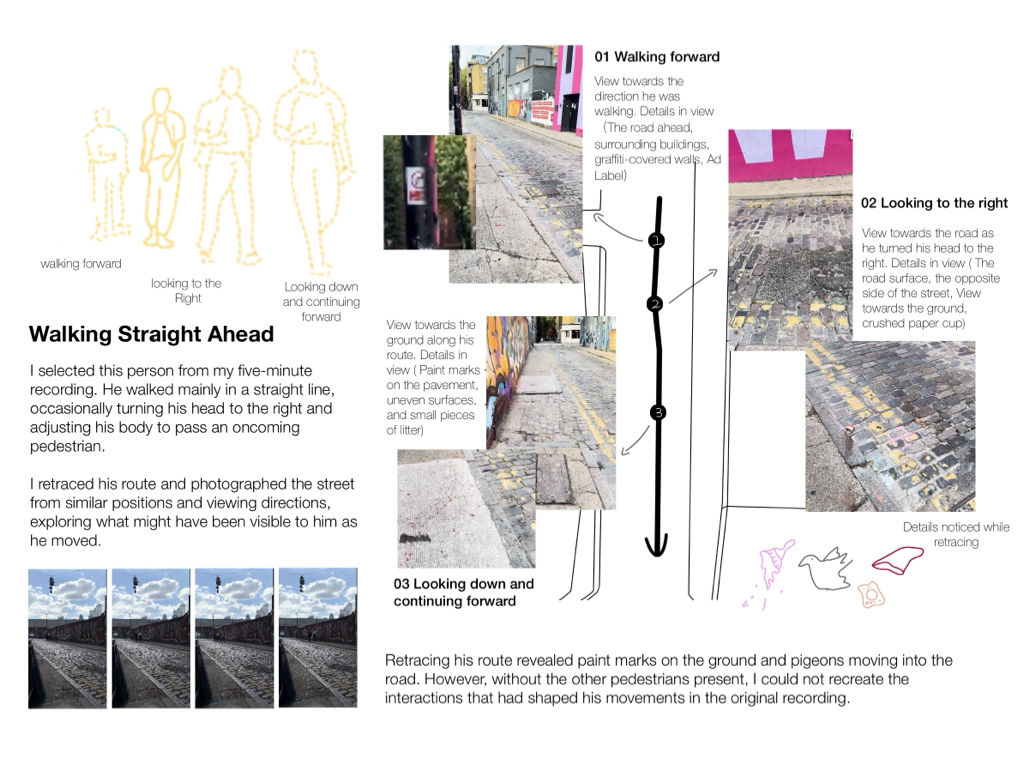
Retracing these routes showed me how the same stretch of Chance Street could appear different from slightly different positions and directions. Following where people moved and turned made me slow down and look more carefully at the kerb, repaired paving and small objects I had previously passed by. I drew some of these details separately to highlight what I noticed during the visit.
Looking up again
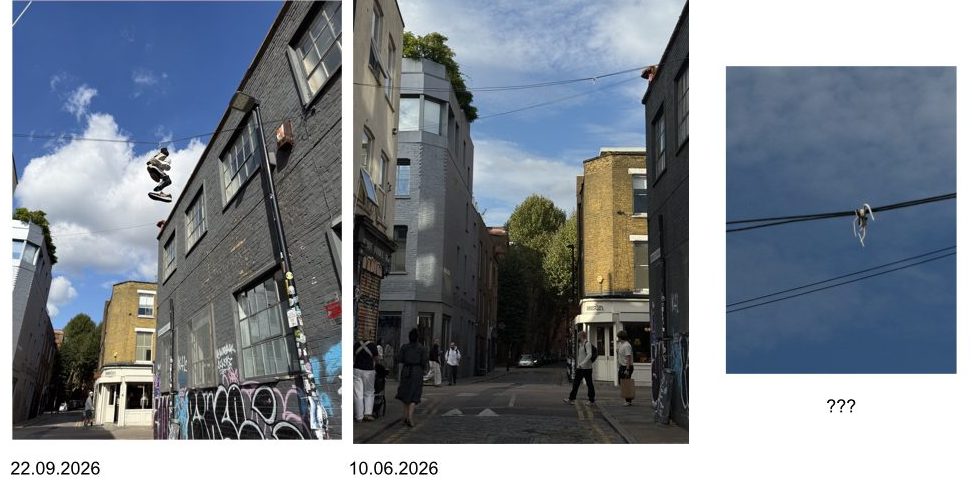
After completing the first route, I looked up to check the shoes and they were gone. I was shocked. I had come back planning to watch whether other people noticed them, but I had not even noticed their disappearance when I arrived. I had been so focused on following the route that I missed the very thing that first made me stop here.
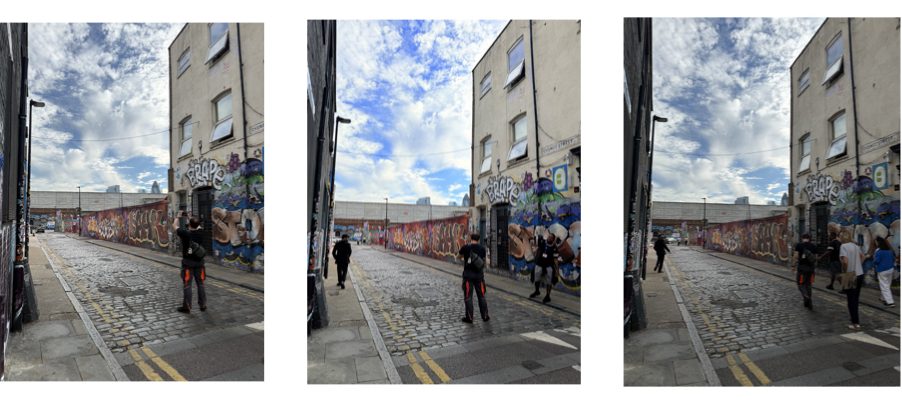
During my earlier observations, I had felt disappointed that I had not seen anyone look up at the shoes. Soon after I discovered they were gone, a group stopped, looked up and took photographs. I heard them talking about the shoes that used to hang there. It felt strange I had been waiting to see someone notice them, and now someone finally did but the shoes were no longer there.
Reflection
The hanging shoes first brought me to Chance Street, but my investigation gradually shifted my attention to people’s movements and the smaller details of the street.
When I returned, I noticed more about the ground and the routes people took, yet I initially missed the disappearance of the shoes themselves.
This made me realise that each method helped me notice certain things, while other changes could still go unnoticed.